
Mezzo Program TV na dziś
- 17:10Verdi : Falstaff - Opéra de Lille
opera
Falstaff 'Commedia lirica' in three acts by Giuseppe Verdi (1813-1901) Libretto by Arrigo Boito First performance in Milan, Teatro alla Scala, February 9, 1893 Orchestre National de Lille, Cheur de l'Opéra de Lille Antonello Allemandi (conductor) Denis Podalydes (stage director) Éric Ruf (sets), Christian Lacroix (costumes), Bertrand Couderc (lights) Tassis Christoyannis (Falstaff) Gabrielle Philiponet (Alice Ford) Julie Robard-Gendre (Meg Page) Silvia Beltrami (Mrs Quickly) Clara Guillon (Nannetta) Gezim Myshketa (Ford) Kevin Amiel (Fenton) Luca Lombardo (Dr Caius) Loic Felix (Bardolfo) Damien Pass (Pistola) Laurent Podalydes, Léo Reynaud (actors) Lille, Opera, May 14, 2023
- 19:25K, Simone Menezes: Rimski-Korsakov, Sheherazade
classical concert
K, Simone Menezes (Music Director and conductor) Golshifteh Farahani (Sheherazade) Kristin Winters (Dinarzade) Simon Scardifield, Simone Menezes, Lynn Serfaty (dialogues) Nikolai Rimsky-Korsakov 1844 - 1908 Sheherazade (Orchestrated under the auspices ff Vincent Paulet)
- 20:30Wiener Philharmoniker, Riccardo Muti: Beethoven 9
classical concert
Wiener Philharmoniker, Riccardo Muti (conductor) Julia Kleiter (soprano), Marianne Crebassa (alto), Michael Spyres (tenor), Günther Groissböck (bass) Ludwig van Beethoven 1770 - 1827 Symphony No. 9 in D Minor, op. 125 Vienna, Musikverein, 7 May 2024
- 21:52Berliner Philharmoniker, Riccardo Muti: Rossini, Verdi, Brahms
classical concert
Berliner Philharmoniker, Riccardo Muti (conductor) Gioachino Rossini 1792 - 1868 William Tell: Overture Giuseppe Verdi 1813 - 1901 I vespri siciliani: Le Quattro Stagioni, Ballet Music Johannes Brahms 1833 - 1897 Symphony No. 2 in D major, op. 73 Bari, Teatro Petruzzelli, 1 May 2025
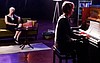 23:29The Sound Weavers: Ludovico Einaudi, Hauschka, Joep Beving, Hania Rani
film dokumentalny
The Sound Weavers: Ludovico Einaudi, Hauschka, Joep Beving, Hania Rani Sold-out concerts, millions of albums sold to make the classical music industry green with envy: neoclassical, as the new musical trend is called, is a mega hit. What makes the form so popular? Is this music skillful or just comforting? Are its composers Mozart 2.0 or rather maestros for the masses? Do they build a bridge to the musical past, allowing our ears to roam comfortably in familiar territory? The documentary traces the journey of some of the protagonists of the genre by telling their stories, and seeking answers from sociologists, neuroscientists, musicologists and even marketing experts. But above all, it allows these creators - these weavers - to have their say. Directed by Anne-Kathrin Peitz 2021
- 0:23The Emerson String Quartet in Prague: Mendelssohn, Dvorák, Brahms
classical concert
Emerson String Quartet Felix Mendelssohn-Bartholdy (1809 - 1847) String Quartet in E flat major, Op. 12 Johannes Brahms (1833 - 1897) String Quartet in B flat major, Op. 67 Antonín Dvorák (1841 - 1904) String Quartet in A flat major, Op. 105 Prague, Rudolfinum, 15 March 2023
- 2:03Johann Strauss: Die Fledermaus - Opéra de Lille
opera
La Chauve-Souris (Die Fledermaus) Operetta in three acts by Johann Strauss II 1825-1899 Libretto by Carl Haffner and Richard Genée based on 'Le Réveillon' by Henri Meilhac and Ludovic Halévy First performance in Vienna, Theater an der Wien, 5 April 1874. New production adapted in French based on the text and the names of the characters of 'Le Réveillon' Orchestre de Picardie, Johanna Malangré (musical direction) Chorus of the Lille Opera Laurent Pelly (stage direction, costumes) Chantal Thomas (set design), Michel Le Borgne (lighting) Agathe Mélinand (adaptation of the libretto, dialogues), Moshe Leiser, Patrice Caurier (French adaptation of the sung texts) Guillaume Andrieux (Gaillardin) Camille Schnoor (Caroline) Marie-Eve Munger (Adele) Christophe Gay (Duparquet) Raphaël Brémard (Bidard) Franck Leguérinel (Tourillon) Héloise Mas (Le prince Orlofsky) Julien Dran (Alfred) Eddy Letexier (Léopold) Claire Antoine (Ida) Lille, Opéra, 11 June 2024
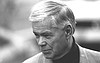 4:11Dietrich Fischer-Dieskau: Last Words
film dokumentalny
Dietrich Fischer-Dieskau: Last Words The great German baritone Dietrich Fischer-Dieskau was greatly admired for his interpretive insight, note-perfect control of the tonal qualities, and shadings of color in his voice, for exceptional rhythmic sense and impeccable diction. His reputation as a lieder singer is so high - he had a repertoire of more than 3.000 songs - that it is easy to forget his extensive list of operatic roles. In this conversation Fischer-Dieskau reveals for the last time on camera the secrets of his outstanding career. His 'Last Words' provide a deep insight into the extraordinary artistic life of one of the most famous and prolific lieder singers of our time. Dietrich Fischer-Dieskau died in May 2012 at the age of 86. Directed by Bruno Monsaingeon 2013
- 5:04Joachim Kühn - Klaviersommer 1999
jazz concert
Joachim Kühn (piano) Directed by Dieter Hens Munich, Klaviersommer 1999
- LEGENDA:
- FILMY
- SERIALE
- ROZRYWKA
- SPORT
- DOKUMENT
- DLA DZIECI
Telewizja Mezzo
Mezzo to francuska stacja telewizyjna skupiająca się na światowej muzyce klasycznej, jazzie i tańcu. Promowana hasłem „Muzyka dla Twoich oczu”, łączy w sobie wrażenia płynące z doskonałego brzmienia i oglądanych występów. Mezzo przenosi widzów do najbardziej prestiżowych sal koncertowych, na deski scen operowych i baletowych oraz w świat znakomitych festiwali muzycznych. W ramówce kanału znajdują się zarówno krótkie klipy, jak i pełnometrażowe przedstawienia prezentujące twórczość legendarnych artystów i nowo odkrytych talentów. Pasmo uzupełniane jest muzycznymi programami i filmami dokumentalnymi. Telewizja Mezzo nadaje swój program przez całą dobę, siedem dni w tygodniu.
Historia telewizji Mezzo
Telewizja Mezzo została założona w 1992 roku przez francuską publiczną grupę mediową France Télévisions. Do roku 1998 nosiła nazwę France Supervision. W 2001 roku Mezzo połączyła się z francuskim kanałem muzycznym Muzzik, zachowując swoją nazwę. Logo stacji składa się z czerwonego napisu „mezzo” ze stylizowaną literą „m”. Siostrzaną stacją telewizji Mezzo jest Mezzo Live HD – kanał nadawany od kwietnia 2010 roku.
Oficjalna siedziba stacji znajduje się w Paryżu we Francji. Obecnym właścicielem jest francuska telewizja publiczna oraz francuska spółka mediowa Grupa Canal+. Aktualnie stacja dociera aż do blisko 60 milionowej widowni i jest dostępna w ponad 80 krajach na całym świecie – w tym w krajach Skandynawskich, w Portugalii, Rosji czy w Polsce.
Od samego początku telewizja Mezzo poświęcona była promocji muzyki klasycznej, jazzu i tańca wśród szerszej widowni. Zamysłem było dotarcie nie tylko do zaprawionych melomanów, ale także osób rozpoczynających przygodę z muzyką poważną. Oferta kanału składa się z programów w różnym formacie. Repertuar obejmuje różne gatunki i formy sztuki klasycznej – m.in. operę, balet, koncerty symfoniczne, jazzowe czy recitalie. Krótko- i pełnometrażowe występy nadawane są w blokach. Przeplatane są programem muzycznym „ InterMezzo ”.
Gdzie można oglądać telewizję Mezzo?
Telewizja Mezzo dostępna jest w Polsce w wybranych sieciach kablowych oraz na największych platformach – Polsat Box i Canal+.
Stacje telewizyjne powiązane z Mezzo
Od roku 2010 oferta nadawcy została rozszerzona o kanał Mezzo Live HD. Emitowane są na nim wyłącznie programy w jakości HD, w tym koncerty i spektakle na żywo z największych scen lirycznych, festiwali klasycznych i jazzowych oraz koncertów z całego świata.
Więcej o telewizji Mezzo
Telewizja Mezzo posiada własną stronę internetową www.mezzo.tv w francuskiej i angielskiej wersji językowej. Prezentowane są na niej nie tylko zapowiedzi transmitowanych spektakli i koncertów, ale też rekomendacje muzyczne, literackie, filmowe czy festiwalowe. Aktualności na temat ramówki i nadchodzących wydarzeń muzycznych umieszczane są na bieżąco również na social mediach stacji, takich jak Facebook, Twitter i Instagram.